Buy meinkredit.eu ?
We are moving the project
meinkredit.eu .
Are you interested in purchasing the domain
meinkredit.eu ?
domain@kv-gmbh.de · 0541-91531010
Buy meinkredit.eu ?
In this example: singular or singular?
In this example, the correct answer is singular. **
How can one recognize a nominative singular-neuter singular in Latin?
In Latin, a nominative singular-neuter singular noun can be recognized by its ending. Neuter nouns typically end in -um in the nominative singular form. For example, the word "templum" meaning temple is a neuter noun in the nominative singular form. Additionally, neuter nouns will have corresponding neuter singular endings in other cases, such as -i in the genitive singular and -o in the ablative singular. **

Similar search terms for Non-singular
Top-Angebote
Products related to Non-singular:
-
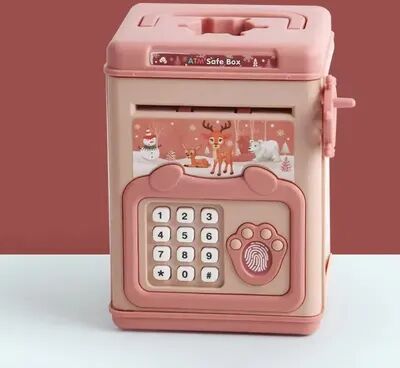
Inspire Daily Merch Smart Fingerprint Bank Childrens Cash Box Electronic Money Box Password Safe Automatic Banking pinkUnlock Smart Savings with the Electronic Piggy Bank Introducing the Electronic Piggy Bank, a revolutionary way for children to save money securely. This Children's Cash Box combines technology and fun, teaching kids the importance of saving with...37,97 $*Shipping: 0,00 $Secure redirect to the provider
-
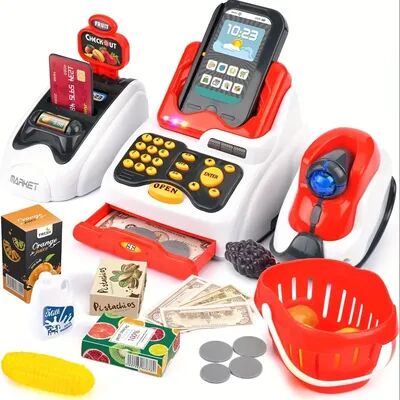
Perfect Picks Market Toy Cash Register For Kids, Checkout Scanner, Play Money Food Set, , Credit Card Machine, Fruit Card Reader Toy Cash Register For Kids, Checkout Scanner, Play Money Food Set, , Credit Card Machine, Fruit Card ReaderEngage Your Child with Playful Learning The 33PCS Toy Cash Register for Kids with Checkout Scanner is a perfect way to help children develop essential skills while having fun! Designed for little ones, this interactive toy includes a realistic...59,97 $*Shipping: 0,00 $Secure redirect to the provider
-
The Psychology Of Money, The Art of Spending Money & Same as Ever by Morgan Housel 3 Books Collection Set - Non Fiction - Paperback Pan MacmillanTitles in this set: 1. Same as Ever 2. The Psychology of Money 3. The Art of Spending Money Description: Same as Ever When planning for the future we often ask, “What will the economy be doing this time next year?” Or, “What will be different ten years from now?” But forecasting is hard. The important events that will shape the future are inherently unpredictable. Instead, we should be asking a different question: What will be the same ten years from now? What will be the same one hundred years from now? Knowledge of the things that never change is more useful, and more important, than an uncertain prediction of an unknowable future. In Same As Ever, bestselling author Morgan Housel shares 24 short stories about the ways that life, behaviour, and business will always be the same. Armed with this knowledge of the unchanging, you will have a powerful new ability to think about risk, opportunity, and how to navigate the uncertainty of the future. The Psychology of Money Doing well with money isn't necessarily about what you know. It's about how you behave. And behavior is hard to teach, even to really smart people. Money investing, personal finance, and business decisions is typically taught as a math-based field, where data and formulas tell us exactly what to do. But in the real world people don't make financial decisions on a spreadsheet. They make them at the dinner table, or in a meeting room, where personal history, your own unique view of the world, ego, pride, marketing, and odd incentives are scrambled together. In The Psychology of Money, award-winning author Morgan Housel shares 19 short stories exploring the strange ways people think about money and teaches you how to make better sense of one of life's most important topics. The Art of Spending Money Can money buy happiness? Yes. Can spending it make you happier? Absolutely. Yet, many of us struggle to unlock its full potential – either by spending on things that don't bring as much joy as they should, or by avoiding investments that would truly enhance our mental well-being. In The Art of Spending Money, award-winning and global bestselling author Morgan Housel offers a refreshingly practical approach to managing wealth while finding deeper meaning and contentment. Instead of cookie-cutter financial advice, Housel provides you with psychological tools to navigate your personal relationship with money and optimise for happiness. Discover why people often mistake envy for admiration, how to align your expectations with your income, and ways to invest in future happiness while avoiding regret. Learn about the dangers of social debt and embrace the radical idea that the fastest way to build wealth is by going slow. The Art of Spending Money delves into the complexities that surround money – envy, social aspirations, identity, and insecurity – crucial aspects often missed in traditional financial books. Armed with new insights into money and wealth, you’ll learn to sidestep common spending...26,99 £*Shipping: 2,99 £Secure redirect to the provider
-
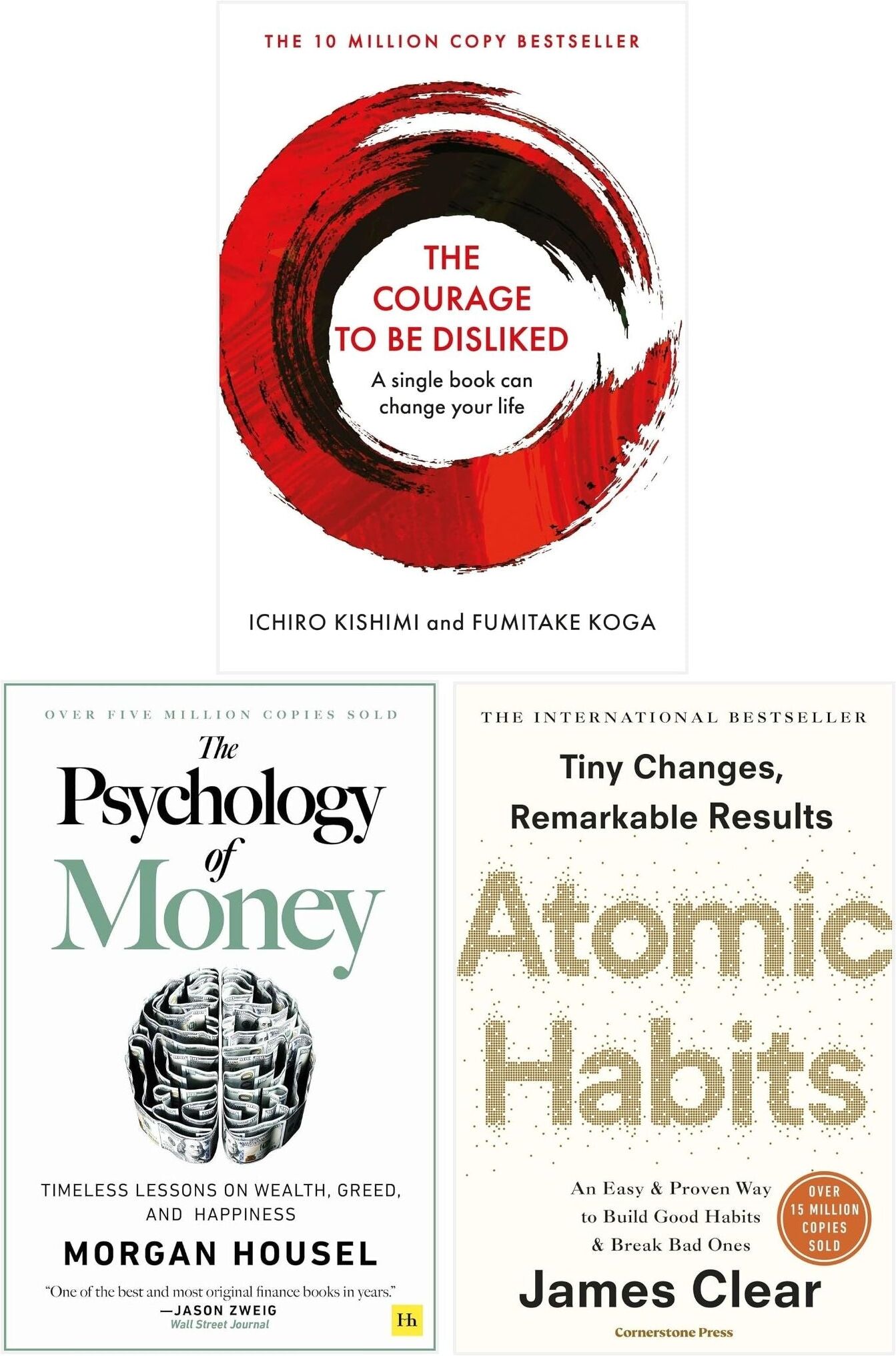
Harriman House The Psychology of Money, Atomic Habits & The Courage to Be Disliked – 3 Book Collection Set Bestselling Self-Development, Personal Finance, Self-HelUpgrade your mindset, habits, and financial thinking with this powerful 3-book collection set, featuring three of the most influential modern self-development titles. This essential bundle includes: The Psychology of Money by Morgan Housel – Discover how emotions and behaviour shape financial decisions and long-term wealth. Atomic Habits by James Clear – Learn how small habits can create powerful, lasting change. The Courage to Be Disliked by Ichiro Kishimi & Fumitake Koga** – Explore a transformative approach to happiness, freedom, and self-acceptance based on Adlerian psychology. Together, these books offer a complete guide to financial wisdom, personal growth, emotional resilience, and habit-building, making this set ideal for anyone looking to improve their life and mindset. Why Readers Love This Collection: Includes 3 bestselling modern self-development books Covers money, habits, mindset, and personal freedom Practical, easy-to-apply life lessons Perfect for beginners and experienced readers alike Ideal gift for motivation and self-improvement A must-have for anyone on a journey of personal growth, this collection delivers powerful insights for building a better, more successful life.22,99 £*Shipping: 2,99 £Secure redirect to the provider

-
What is second person singular?
Second person singular is a grammatical category that refers to the person being spoken to or addressed directly. It is used when the speaker is talking to one individual. In English, second person singular pronouns include "you" and "your." This form of address is common in everyday conversations, instructions, and commands. **
-
Is "Luft" singular or plural?
"Luft" is a singular noun in German. It means "air" in English. **
-
Is it singular or plural?
The question "Is it singular or plural?" is asking whether the subject being referred to is one single entity (singular) or multiple entities (plural). This question is important in grammar as it helps determine the correct verb form to use in a sentence. By identifying whether a subject is singular or plural, we can ensure that the verb agrees in number with the subject for grammatical accuracy. **
-
'Singular or plural after audience?'
The word "audience" can be used with both singular and plural verbs, depending on the context. When referring to the audience as a collective group, a singular verb is used, such as "The audience is enjoying the performance." However, when referring to the individual members of the audience, a plural verb is used, such as "The audience are expressing their opinions." Therefore, it is important to consider the specific context in which "audience" is being used in order to determine whether a singular or plural verb should be used. **

What does 1 person singular mean?
1 person singular refers to the grammatical form used when a sentence is referring to only one individual. It is used when the subject of the sentence is "I" in English. This form is important in distinguishing between different subjects and their actions in a sentence. **
What is the 2nd person singular?
The 2nd person singular is a grammatical category used to address one individual directly. It is used when speaking to one person informally or formally, depending on the context. In English, the 2nd person singular pronoun is "you." **
Top-Angebote
Products related to Non-singular:
-
Ivy Bronx Belul Peel and Stick 45.72cm x 45.72cm PVC Singular Tile in Ivory Ivory 45.72cm W X 45.72cm LEmbracing the natural allure of stones, our flooring offers a captivating and rustic ambience. It will dress your floor in natural stone that will revive your home. Made from selected PVC, these tiles are suitable even in your busiest spaces. Thanks to their convenient self-adhesive backing, applying them to your living room or bedroom floors is a breeze. Ivy Bronx51,99 £*Shipping: 4,99 £Secure redirect to the provider
-
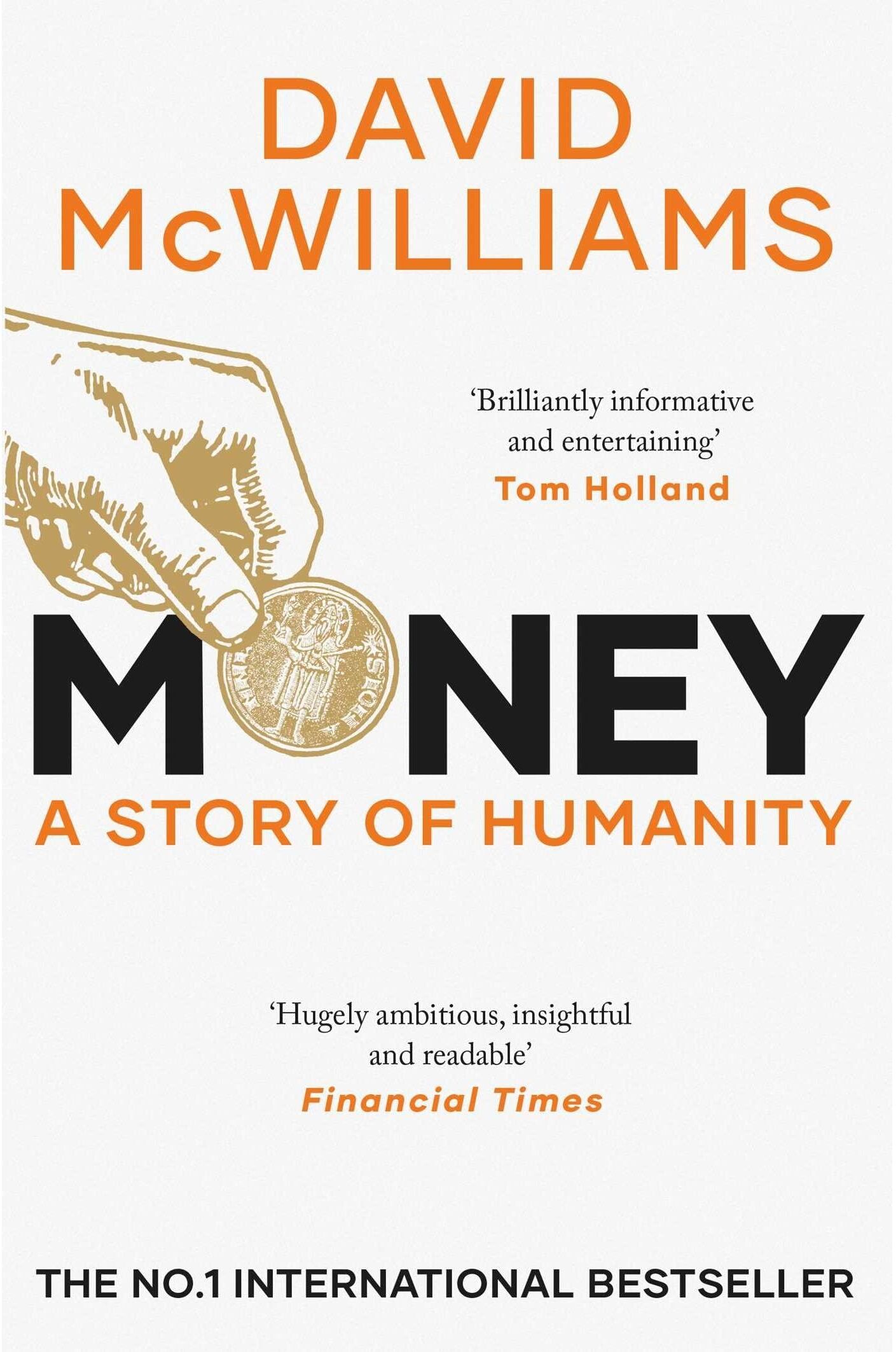
Simon & Schuster Money: A Story of Humanity by David McWilliams Economic History & Global Finance ExplainedIn Money: A Story of Humanity, renowned economist David McWilliams explores the fascinating history of money — not just as currency, but as a powerful force that has shaped human civilisation, relationships, technology, and global society. From ancient barter systems to cryptocurrency revolutions, McWilliams reveals how money reflects our values, ambitions, fears, politics, and culture.Rich with storytelling, sharp insights, and humour, this book makes complex economic ideas accessible, engaging, and deeply human. Perfect for readers who enjoy exploring how history, psychology, markets, and power intersect, Money: A Story of Humanity provides a fresh, eye-opening look at how money drives — and is driven by — human behaviour. Ideal for fans of Yuval Noah Harari, Tim Harford, Niall Ferguson, and Mary Beard.7,99 £*Shipping: 2,99 £Secure redirect to the provider
-
Inspire Daily Merch Smart Fingerprint Bank Childrens Cash Box Electronic Money Box Password Safe Automatic Banking pinkUnlock Smart Savings with the Electronic Piggy Bank Introducing the Electronic Piggy Bank, a revolutionary way for children to save money securely. This Children's Cash Box combines technology and fun, teaching kids the importance of saving with...37,97 $*Shipping: 0,00 $Secure redirect to the provider
-
Perfect Picks Market Toy Cash Register For Kids, Checkout Scanner, Play Money Food Set, , Credit Card Machine, Fruit Card Reader Toy Cash Register For Kids, Checkout Scanner, Play Money Food Set, , Credit Card Machine, Fruit Card ReaderEngage Your Child with Playful Learning The 33PCS Toy Cash Register for Kids with Checkout Scanner is a perfect way to help children develop essential skills while having fun! Designed for little ones, this interactive toy includes a realistic...59,97 $*Shipping: 0,00 $Secure redirect to the provider
-
In this example: singular or singular?
In this example, the correct answer is singular. **
-
How can one recognize a nominative singular-neuter singular in Latin?
In Latin, a nominative singular-neuter singular noun can be recognized by its ending. Neuter nouns typically end in -um in the nominative singular form. For example, the word "templum" meaning temple is a neuter noun in the nominative singular form. Additionally, neuter nouns will have corresponding neuter singular endings in other cases, such as -i in the genitive singular and -o in the ablative singular. **
-
What is second person singular?
Second person singular is a grammatical category that refers to the person being spoken to or addressed directly. It is used when the speaker is talking to one individual. In English, second person singular pronouns include "you" and "your." This form of address is common in everyday conversations, instructions, and commands. **
-
Is "Luft" singular or plural?
"Luft" is a singular noun in German. It means "air" in English. **
Similar search terms for Non-singular
-
The Psychology Of Money, The Art of Spending Money & Same as Ever by Morgan Housel 3 Books Collection Set - Non Fiction - Paperback Pan MacmillanTitles in this set: 1. Same as Ever 2. The Psychology of Money 3. The Art of Spending Money Description: Same as Ever When planning for the future we often ask, “What will the economy be doing this time next year?” Or, “What will be different ten years from now?” But forecasting is hard. The important events that will shape the future are inherently unpredictable. Instead, we should be asking a different question: What will be the same ten years from now? What will be the same one hundred years from now? Knowledge of the things that never change is more useful, and more important, than an uncertain prediction of an unknowable future. In Same As Ever, bestselling author Morgan Housel shares 24 short stories about the ways that life, behaviour, and business will always be the same. Armed with this knowledge of the unchanging, you will have a powerful new ability to think about risk, opportunity, and how to navigate the uncertainty of the future. The Psychology of Money Doing well with money isn't necessarily about what you know. It's about how you behave. And behavior is hard to teach, even to really smart people. Money investing, personal finance, and business decisions is typically taught as a math-based field, where data and formulas tell us exactly what to do. But in the real world people don't make financial decisions on a spreadsheet. They make them at the dinner table, or in a meeting room, where personal history, your own unique view of the world, ego, pride, marketing, and odd incentives are scrambled together. In The Psychology of Money, award-winning author Morgan Housel shares 19 short stories exploring the strange ways people think about money and teaches you how to make better sense of one of life's most important topics. The Art of Spending Money Can money buy happiness? Yes. Can spending it make you happier? Absolutely. Yet, many of us struggle to unlock its full potential – either by spending on things that don't bring as much joy as they should, or by avoiding investments that would truly enhance our mental well-being. In The Art of Spending Money, award-winning and global bestselling author Morgan Housel offers a refreshingly practical approach to managing wealth while finding deeper meaning and contentment. Instead of cookie-cutter financial advice, Housel provides you with psychological tools to navigate your personal relationship with money and optimise for happiness. Discover why people often mistake envy for admiration, how to align your expectations with your income, and ways to invest in future happiness while avoiding regret. Learn about the dangers of social debt and embrace the radical idea that the fastest way to build wealth is by going slow. The Art of Spending Money delves into the complexities that surround money – envy, social aspirations, identity, and insecurity – crucial aspects often missed in traditional financial books. Armed with new insights into money and wealth, you’ll learn to sidestep common spending...26,99 £*Shipping: 2,99 £Secure redirect to the provider
-
Harriman House The Psychology of Money, Atomic Habits & The Courage to Be Disliked – 3 Book Collection Set Bestselling Self-Development, Personal Finance, Self-HelUpgrade your mindset, habits, and financial thinking with this powerful 3-book collection set, featuring three of the most influential modern self-development titles. This essential bundle includes: The Psychology of Money by Morgan Housel – Discover how emotions and behaviour shape financial decisions and long-term wealth. Atomic Habits by James Clear – Learn how small habits can create powerful, lasting change. The Courage to Be Disliked by Ichiro Kishimi & Fumitake Koga** – Explore a transformative approach to happiness, freedom, and self-acceptance based on Adlerian psychology. Together, these books offer a complete guide to financial wisdom, personal growth, emotional resilience, and habit-building, making this set ideal for anyone looking to improve their life and mindset. Why Readers Love This Collection: Includes 3 bestselling modern self-development books Covers money, habits, mindset, and personal freedom Practical, easy-to-apply life lessons Perfect for beginners and experienced readers alike Ideal gift for motivation and self-improvement A must-have for anyone on a journey of personal growth, this collection delivers powerful insights for building a better, more successful life.22,99 £*Shipping: 2,99 £Secure redirect to the provider
-
Dermalogica Pro-Collagen Banking Serum 30mlDiscover Dermalogica Pro-Collagen Banking Serum‚Äã. Promote, protect and preserve your skin's collagen with this innovative and nourishing serum from Dermalogica. This powerful serum supports visibly plumper, more luminous skin while hydrating to help reduce the appearance of fine lines. The Potent Pro-Collagen Preservation Complex helps save collagen by delivering an innovative blend of Collagen Amino Acids, Carnosine Dipeptide, and antioxidants which defend against collagen-degrading free radicals. Formulated with soothing Jojoba Ester and Polyglutamic Acid which work to nourish the skin's moisture barrier - this helps visibly plump the skin for a firmer appearance. Wild Indigo Extract and Arginine PCA help to restore the skin's radiance, while Pink Carnation Flower Extract helps improve skin's softness and overall resilience. Ingredients: Water/Aqua/Eau, Pentylene Glycol, Coco-Caprylate/Caprate, Glycerin, Propanediol, Simmondsia Chinensis (Jojoba) Seed Oil, Trehalose, Oryza Sativa (Rice) Bran Water, Butylene Glycol, Ethoxydiglycol, Triheptanoin, Arginine PCA, Diglycerin, Dipotassium Glycyrrhizate, Sodium Hyaluronate, Collagen Amino Acids, Glycine Soja (Soybean) Oil, Helianthus Annuus (Sunflower) Seed Oil, Citrus Aurantium Dulcis (Orange) Peel Oil, Citrus Aurantium Bergamia (Bergamot) Fruit Oil, Citrus Paradisi (Grapefruit) Peel Oil, Rosmarinus Officinalis (Rosemary) Leaf Extract, Cupressus Sempervirens Leaf/Nut/Stem Oil, Santalum Album (Sandalwood) Oil, Citrus Limon (Lemon) Peel Oil, Rosa Damascena Flower Oil, Jasminum Sambac (Jasmine) Flower Extract, Hydrolyzed Jojoba Esters, Oryza Sativa (Rice) Bran Extract, Aloe Barbadensis Leaf Extract, Tephrosia Purpurea Seed Extract, Helianthus Annuus (Sunflower) Extract, Juniperus Virginiana Oil, Tagetes Minuta Flower Oil, Rosmarinus Officinalis (Rosemary) Leaf Oil, Cistus Ladaniferus Leaf/Stem Extract, Hydrolyzed Rice Protein, Tocopheryl Acetate, Tocopherol, Phospholipids, Carnosine, Glyceryl Stearate Citrate, Caprylyl Glycol, Polyglutamic Acid, Glycolipids, Glycine Soja (Soybean) Sterols, Acrylates/C10-30 Alkyl Acrylate Crosspolymer, Glyceryl Caprylate, Sclerotium Gum, Polyquaternium-80, Didecyldimonium Chloride, Dianthus Caryophyllus Flower Extract, Xanthan Gum, Methylpropanediol, Cetearyl Alcohol, PEG-40 Hydrogenated Castor Oil, Ammonium Acryloyldimethyltaurate/Beheneth-25 Methacrylate Crosspolymer, Phytic Acid, Polysorbate 20, Tetrasodium Glutamate Diacetate, Citric Acid, Sodium Hydroxide, Sodium Polyacryloyldimethyl Taurate, Sodium Benzoate, Potassium Sorbate, Limonene, Linalool.89,00 £*Shipping: 0,00 £Secure redirect to the provider
-
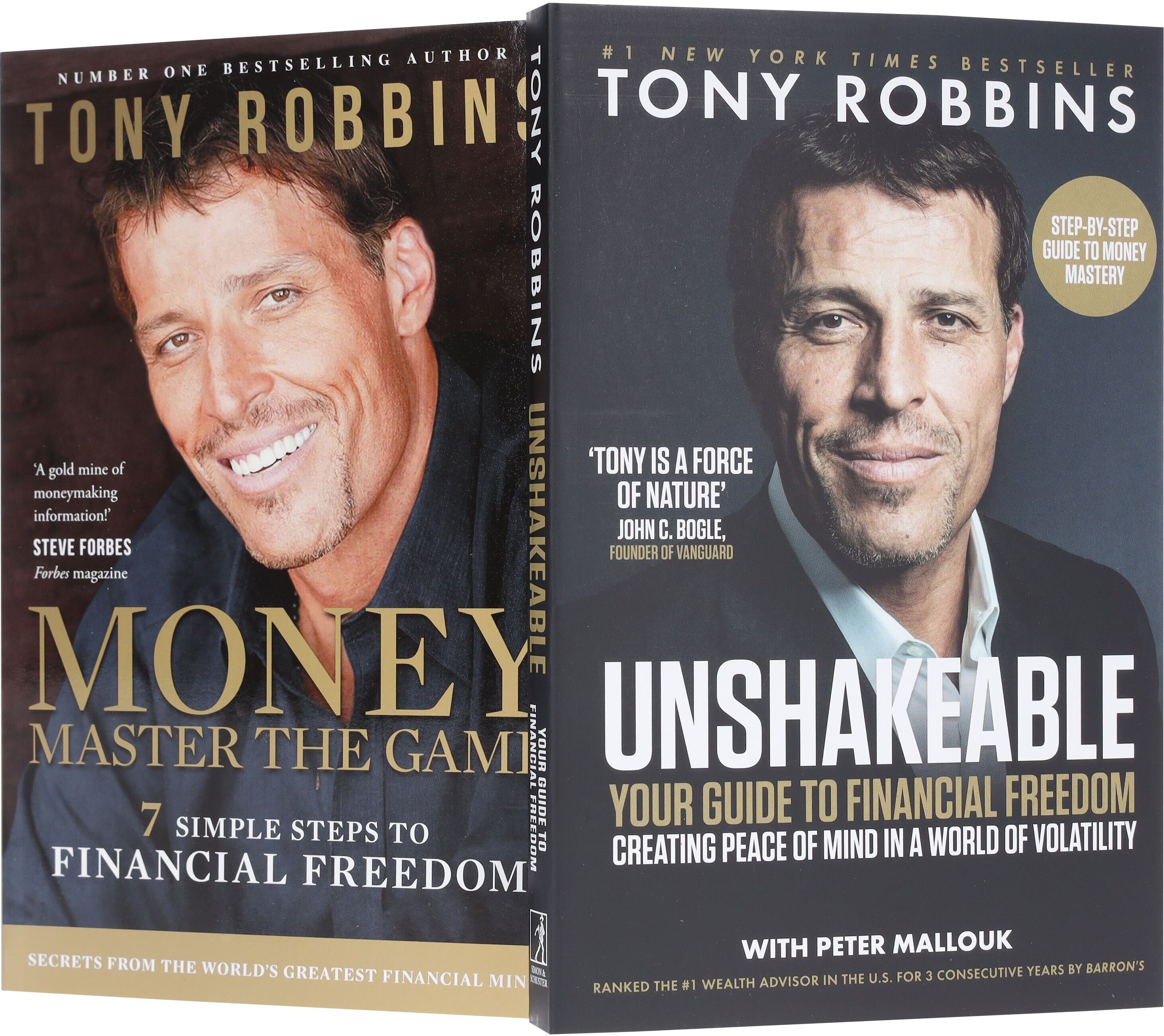
Tony Robbins Collection (Unshakeable: Your Guide to Financial Freedom & Money Master the Game) 2 Books Set - Non Fiction - Paperback Simon & SchusterTitles in this Set: 1. Unshakeable: Your Guide to Financial Freedom 2. Money Master the Game Description: Unshakeable: Your Guide to Financial Freedom Tony Robbins, arguably the most recognizable life and business strategist and guru, is back with a timely, unique follow-up to his smash New York Times bestseller Money: Master the Game. Market corrections are as constant as seasons are in nature. There have been 30 such corrections in the past 30 years, yet there’s never been an action plan for how not only to survive, but thrive through each change in the stock market. Building upon the principles in Money: Master the Game, Robbins offers the reader specific steps they can implement to protect their investments while maximizing their wealth. It’s a detailed guide designed for investors, articulated in the common-sense, practical manner that the millions of loyal Robbins fans and students have come to expect and rely upon. Few have navigated the turbulence of the stock market as adeptly and successfully as Tony Robbins. His proven, consistent success over decades makes him singularly qualified to help investors (both seasoned and first-timers alike) preserve and add to their investments. Money Master the Game Tony Robbins has created a 7-step blueprint for securing financial freedom. Based on extensive research and one-on-one interviews with more than 50 of the most legendary financial experts in the world - from Carl Icahn, to Warren Buffett, to Jack Bogle and Steve Forbes. Robbins has a brilliant way of using metaphor and story to illustrate even the most complex financial concepts - making them simple and actionable. With expert advice on our most important financial decisions, Robbins dispels the myths that often rob people of their financial dreams. Money: Master the Game contains expert advice for readers of every income level, providing guidance through the steps to become financially free by creating a lifetime income plan. This book delivers invaluable information and essential practices for getting your financial house in order. It's the book millions of people have been waiting for.12,99 £*Shipping: 2,99 £Secure redirect to the provider
-
Is it singular or plural?
The question "Is it singular or plural?" is asking whether the subject being referred to is one single entity (singular) or multiple entities (plural). This question is important in grammar as it helps determine the correct verb form to use in a sentence. By identifying whether a subject is singular or plural, we can ensure that the verb agrees in number with the subject for grammatical accuracy. **
-
'Singular or plural after audience?'
The word "audience" can be used with both singular and plural verbs, depending on the context. When referring to the audience as a collective group, a singular verb is used, such as "The audience is enjoying the performance." However, when referring to the individual members of the audience, a plural verb is used, such as "The audience are expressing their opinions." Therefore, it is important to consider the specific context in which "audience" is being used in order to determine whether a singular or plural verb should be used. **
-
What does 1 person singular mean?
1 person singular refers to the grammatical form used when a sentence is referring to only one individual. It is used when the subject of the sentence is "I" in English. This form is important in distinguishing between different subjects and their actions in a sentence. **
-
What is the 2nd person singular?
The 2nd person singular is a grammatical category used to address one individual directly. It is used when speaking to one person informally or formally, depending on the context. In English, the 2nd person singular pronoun is "you." **
* All prices are inclusive of VAT and, if applicable, plus shipping costs. The offer information is based on the details provided by the respective shop and is updated through automated processes. Real-time updates do not occur, so deviations can occur in individual cases. ** Note: Parts of this content were created by AI.